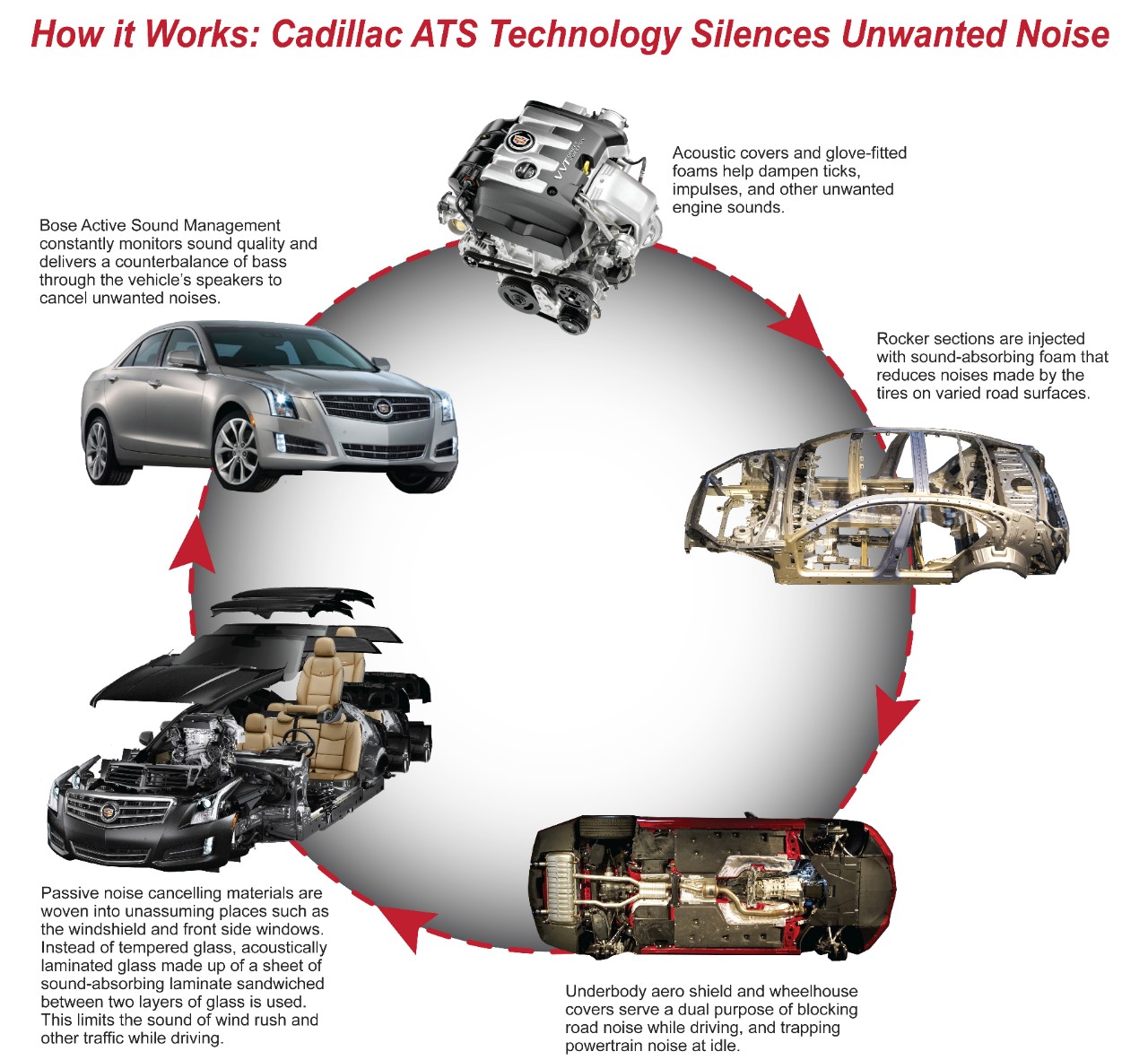
GM 2013 Cadillac Uses Active Noise Control

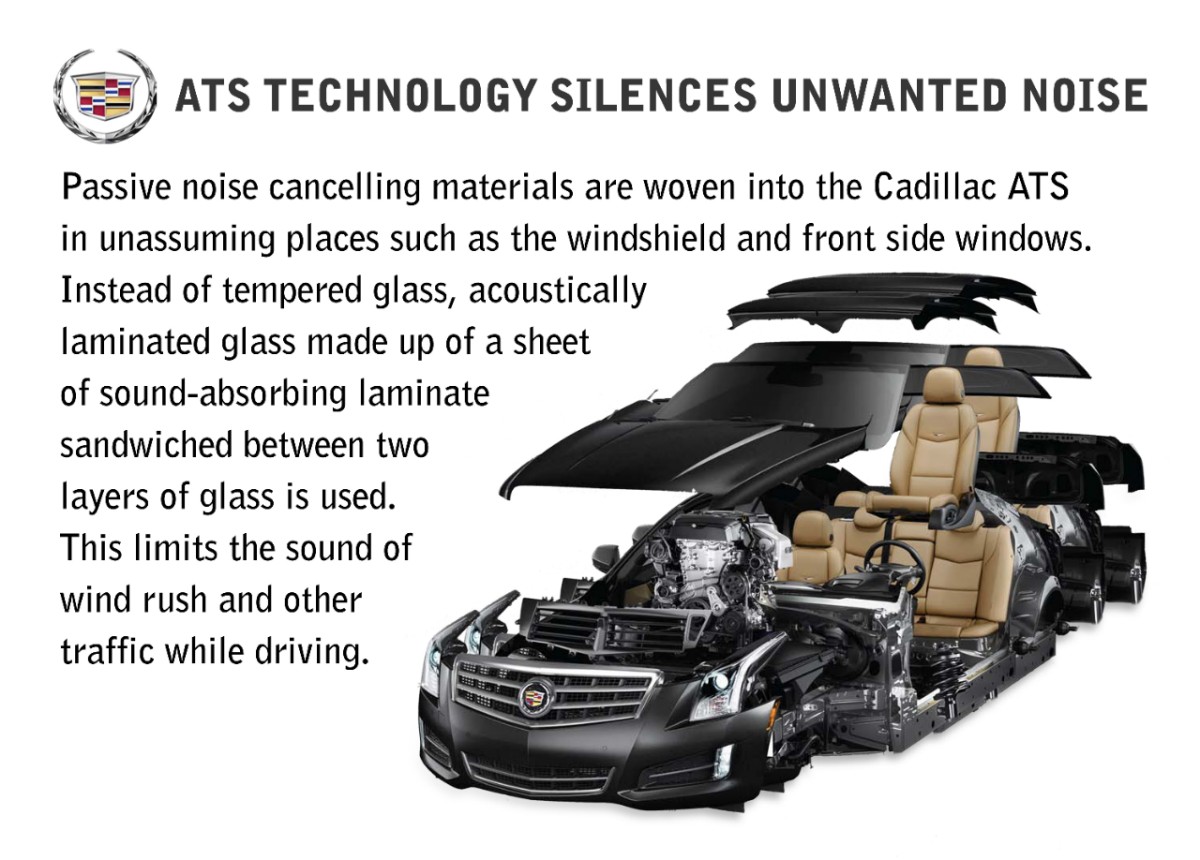
The new 2013 GM Cadillac ATS sports sedan uses active noise control from Bose to reduce noise inside the passenger cabin.

Three microphones on the interior door frame on the front driver and passenger and rear driver’s side monitor the sound quality. The loudspeakers from the audio system are used to cancel low frequency noise within the cabin between 40Hz-180Hz.

Read more on the GM news web site.
Restaurant with variable acoustics

Popular Science have an interesting story of a restaurant in Berkley California with an ambient noise audio system that can be adjusted by staff, usually depending on the number people in the restaurant – if there are few patrons, the system is turned up, if the restaurant is full, the system is turned down.

Read the article on Popular Science.


Ford Focus ST

Tailored Engine Noise in Ford Focus

Ford Focus ST

Ford Europe has developed a tailored engine noise for the new Ford Focus powered by a 1.6-L EcoBoost engine. The system is called the Sound Symposer, which is a box with four chambers, two in the engine bay and two outside. The chambers are separated by a movable flap that opens when the engine is under high load, so that sound is transmitted to the outlet chambers. The system boosts engine volumes into passenger compartment in 200-to-450-Hz frequency range.

Watch the youtube videos to hear it work.

And you watch an advert for the Focus.
See also stories on Ford Media Release, SAE.

Fake Engine Noise

The online Popular Mechanics magazine has an interesting article on The Rise of the Fake Engine Roar. Those that have followed the history of active noise control will remember that Lotus created an acoustic system to create fake engine noise inside the cabin of automobiles to enhance the psychoacoustics perception of engine noise for passengers.

Acoustic Cloaking Device

Researchers at Duke University have shown both theoretically and experimentally a device that is capable of providing acoustic ‘cloaking’ at frequencies between 1kHz-4kHz. The demonstration works for very directional sound waves.

More information can be found on the BBC News web site.

Better MRIs using Low Frequency Noise

Researchers at Minnesota’s Mayo Clinic have developed a technique that uses low frequency sound to vibrate internal organs and when used with a Magnetic Resonance Imaging scanner (MRI) can be used to determine the elasticity or stiffness of internal organs, which is an indicator that something is wrong.

This new technique, called magnetic resonance elastography (MRE), was commercialised by GE Healthcare. They released their new device called MR-Touch, which is the first commercial application of MRE technology, which the company has licensed from the Mayo Clinic.

To read more about this story visit the Scientific American web site.